Iris Lange · 18 October 2026
Exploring Volunteer-Led Efforts to Digitize Historic Lighthouse Logs from Remote Shores
The Role of Lighthouse Logs in Maritime History
Lighthouse logs record daily observations of weather conditions, vessel movements, and equipment status at coastal stations that have operated for centuries, and these documents provide primary data for studies of climate patterns along with shipping routes. Researchers have examined entries from the 19th and early 20th centuries that detail storm events and fog patterns which help reconstruct environmental histories for regions where instrumental records remain sparse. Data from these logs appear in academic projects that analyze long-term changes in sea levels and wind frequencies across multiple continents.
Archives hold thousands of such volumes yet many remain in physical form only at sites that lack climate-controlled storage, which creates risks of deterioration from salt air and humidity. Volunteer groups have stepped forward to photograph and transcribe these materials because professional staff shortages at smaller heritage organizations limit the pace of conversion to digital formats.
Volunteer Networks Operating in Isolated Locations
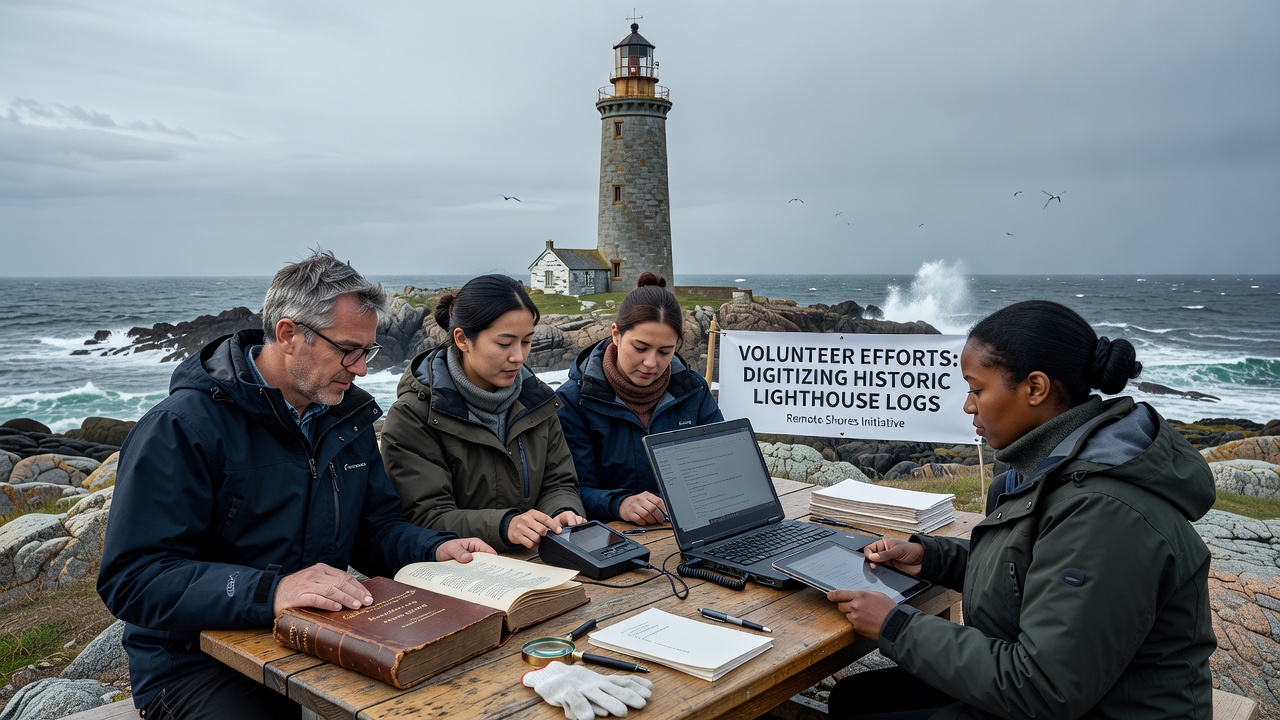
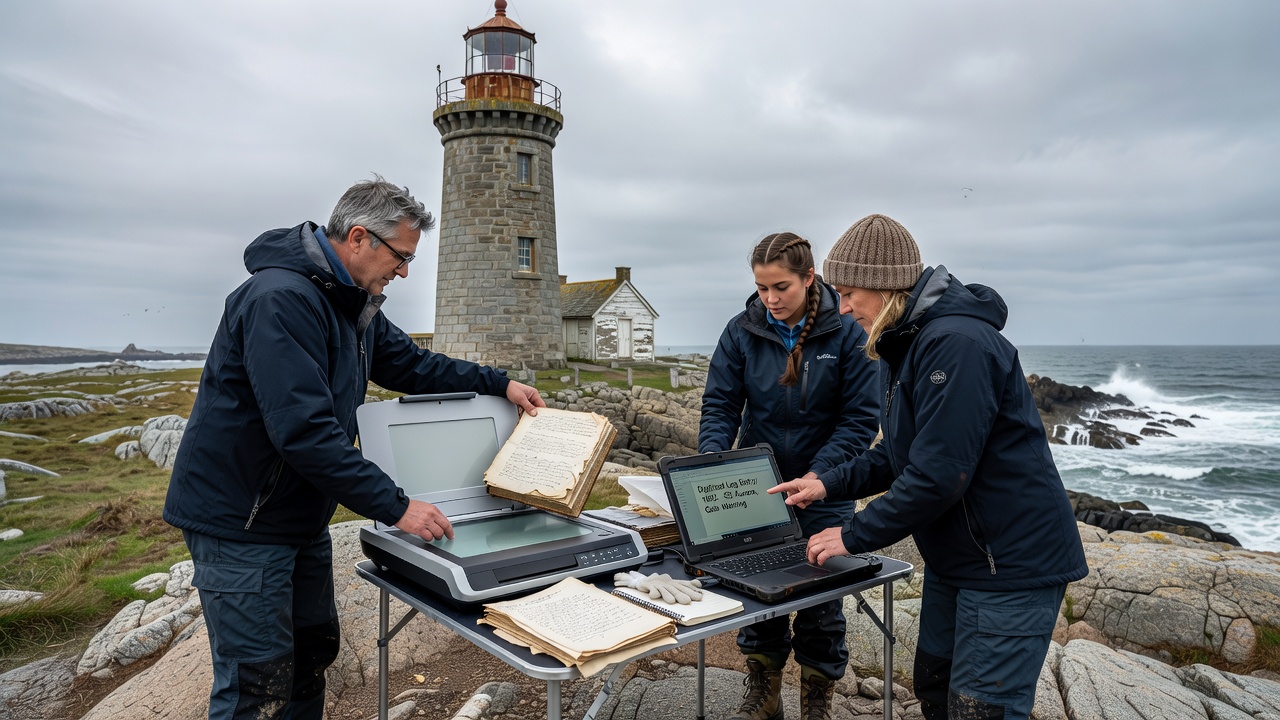
Teams composed of retired mariners, local historians, and technology enthusiasts travel to remote lighthouses by boat or helicopter to set up portable scanners and laptops for on-site work. One project coordinated through North American coastal societies has processed logs from stations in Newfoundland and Labrador where access occurs only during summer months when ice clears from surrounding waters. Participants capture high-resolution images of each page then apply optical character recognition software to convert handwritten entries into searchable text files.
Similar efforts take place along the southern coast of Australia where volunteers affiliated with maritime heritage groups handle logs from light stations on the Great Australian Bight. These teams coordinate with the National Library of Australia to upload completed datasets into a centralized repository that researchers worldwide can query for studies on southern ocean weather systems.
Technical Methods and Data Standards
Volunteers follow standardized protocols that include metadata tagging for date, location, and observer name so that future users can filter records efficiently. Software tools developed by university computer science departments allow correction of transcription errors through crowdsourced review interfaces where multiple readers compare original scans against generated text. This approach has improved accuracy rates above 95 percent for 19th-century entries according to reports from participating institutions.
Cloud storage platforms host the growing collections while open-source mapping applications link each log entry to geographic coordinates. Those who manage the systems note that integration with existing maritime databases from agencies such as the National Oceanic and Atmospheric Administration enables cross-referencing with modern buoy data for climate research.
Obstacles Encountered in Remote Settings
Power supply limitations force volunteers to rely on solar panels and battery packs during multi-day stays at stations without grid connections. Internet connectivity often drops to satellite links that transmit data in batches after each session ends, and weather delays can strand teams for days beyond planned schedules. Despite these constraints groups continue operations because the alternative leaves irreplaceable records vulnerable to loss during extreme coastal storms.
Funding comes primarily from small grants issued by heritage foundations and private donations collected through online campaigns that highlight specific lighthouse stations. Equipment costs remain modest since volunteers repurpose consumer-grade scanners and laptops rather than purchasing specialized archival hardware.
Developments Scheduled for October 2026
In October 2026 a series of regional workshops will bring together volunteer coordinators from North America, Europe, and the Asia-Pacific to share best practices on handling fragile paper and standardizing file formats. Organizers expect participants to test new mobile applications designed for offline transcription that sync once connectivity returns. These sessions will also introduce partnerships with academic programs that train students in digital preservation techniques applicable to other types of coastal records.
Early registration data indicate strong interest from groups that have already completed pilot digitization at stations in British Columbia and Tasmania. The gatherings aim to establish shared quality benchmarks that participating archives can adopt when ingesting new collections.
Broader Impacts on Research and Public Access
Once digitized the logs become available through public portals that allow searches by keyword or date range, which expands access beyond specialists to educators and genealogists tracing family connections to lighthouse keepers. Studies published in peer-reviewed journals have already used these datasets to refine models of historical hurricane tracks along the Atlantic seaboard. Observers note that the volunteer model demonstrates how community involvement can accelerate preservation work that would otherwise require decades of institutional resources.
Continued expansion depends on recruitment of new participants who possess both technical skills and willingness to travel to isolated sites. Training materials developed by existing teams now circulate through online forums so that interested individuals can prepare for field assignments without prior archival experience.
Conclusion
Volunteer-led digitization of historic lighthouse logs addresses preservation needs at remote coastal stations while generating datasets that support ongoing maritime and climate research. Coordinated efforts across multiple countries have produced searchable archives that extend the reach of these primary sources to wider audiences. Scheduled activities in October 2026 will further align methods and expand training opportunities for those who continue the work at additional locations.